

White Heart Anthurium
Anthurium 'White Heart'

Height: 24 inches
Spread: 12 inches
Sunlight:


Hardiness Zone: 10b
Other Names: Tail Flower, Flamingo Flower
Description:
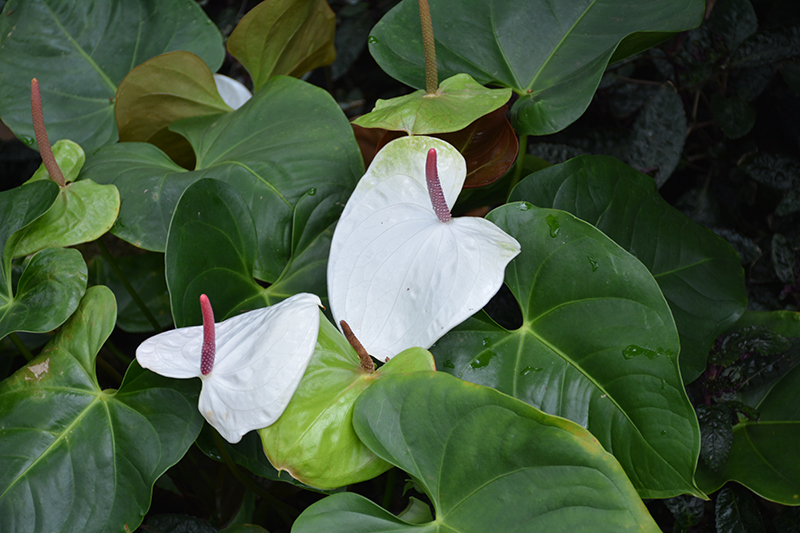
An exciting tropical plant producing spectacular white, heart shaped spathes that last for several weeks; each with a rosy-pink spadix covered in tiny flowers; large, dark green, shiny leaves make excellent contrast; great for containers
Ornamental Features
White Heart Anthurium features unusual spikes of white heart-shaped flowers rising above the foliage from late spring to mid fall. The flowers are excellent for cutting. Its large glossy heart-shaped leaves remain dark green in color throughout the year.
Landscape Attributes
White Heart Anthurium is an open herbaceous evergreen tropical plant with an upright spreading habit of growth. Its relatively coarse texture can be used to stand it apart from other garden plants with finer foliage.
This plant will require occasional maintenance and upkeep. Trim off the flower heads after they fade and die to encourage more blooms late into the season. Deer don't particularly care for this plant and will usually leave it alone in favor of tastier treats. It has no significant negative characteristics.
White Heart Anthurium is recommended for the following landscape applications;
- Accent
- Mass Planting
- Container Planting
- Hanging Baskets
Planting & Growing
This plant is native to the tropics and prefers growing in moist environments with evenly warm conditions all year round. In our climate, it is usually grown as an outdoor annual in the garden or in a container. If you want it to survive the winter, it can be brought in to the house and provided with special care, and then returned to the garden the following season. In its preferred tropical habitat, it can grow to be around 24 inches tall at maturity, with a spread of 12 inches. However, when grown as an annual or when overwintered indoors, it can be expected to perform differently, and its exact height and spread will depend on many factors; you may wish to consult with our experts as to how it might perform in your specific application and growing conditions.
This plant does best in partial shade to full shade. Keep it well away from hot, dry locations that receive direct afternoon sun or which get reflected sunlight, such as against the south side of a white wall. It does best in average to evenly moist conditions, but will not tolerate standing water. It may require supplemental watering during periods of drought or extended heat. This plant will benefit from a regular feeding with a general-purpose fertilizer with every second or third watering. It is not particular as to soil type, but has a definite preference for acidic soils. It is somewhat tolerant of urban pollution. This particular variety is an interspecific hybrid, and parts of it are known to be toxic to humans and animals, so care should be exercised in planting it around children and pets. It can be propagated by division; however, as a cultivated variety, be aware that it may be subject to certain restrictions or prohibitions on propagation.
White Heart Anthurium is a fine choice for the garden, but it is also a good selection for planting in outdoor containers and hanging baskets. With its upright habit of growth, it is best suited for use as a 'thriller' in the 'spiller-thriller-filler' container combination; plant it near the center of the pot, surrounded by smaller plants and those that spill over the edges. Note that when growing plants in outdoor containers and baskets, they may require more frequent waterings than they would in the yard or garden.


